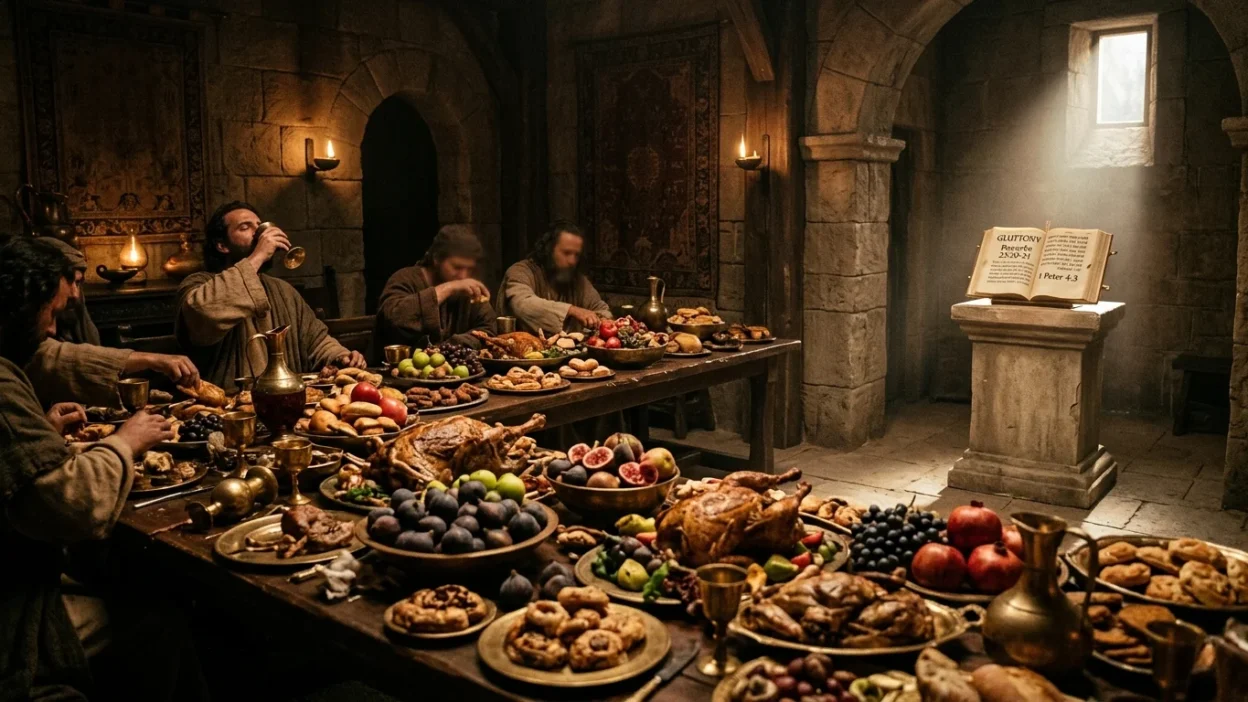
The gluttony meaning in the Bible is an important topic for Christians seeking to understand God’s view of self-control, discipline, and stewardship.
While many people associate gluttony only with overeating, the Bible presents it as a broader issue of excessive desire and lack of self control.
Understanding the gluttony meaning in the Bible helps believers recognize how their habits and attitudes can affect their spiritual lives and relationship with God.
Many readers search for the gluttony meaning in the Bible because they want to know whether gluttony is considered a sin and how Scripture encourages moderation.
Throughout both the Old and New Testaments, the Bible teaches that believers should honor God in every aspect of life, including how they manage food, possessions, and personal desires.
This guide explores the biblical meaning, history, spiritual significance, and practical lessons about gluttony.
Quick Answer
The gluttony meaning in the Bible refers to excessive consumption or uncontrolled desire, especially regarding food and drink.
Scripture teaches that gluttony reflects a lack of self control and encourages believers to practice moderation, discipline, and gratitude while honoring God with their lives.
What Does Gluttony Mean in the Bible?
In biblical terms, gluttony means consuming more than is needed or allowing physical desires to control one’s life.
It is often associated with:
- Overeating
- Excessive drinking
- Self-indulgence
- Lack of self-control
- Ignoring spiritual priorities
The gluttony meaning in the Bible emphasizes that believers should exercise wisdom and moderation in all areas of life.
Gluttony Meaning Table
| Aspect | Description |
|---|---|
| Word | Gluttony |
| Biblical Meaning | Excessive self-indulgence |
| Main Focus | Lack of self-control |
| Opposite Virtue | Self-discipline |
| Related Topics | Moderation, stewardship |
| Spiritual Theme | Honoring God through disciplined living |
Origin and History of Gluttony
The English word “gluttony” comes from the Latin word gluttire, meaning “to gulp down” or “to swallow greedily.”
Throughout biblical history, excessive eating and drinking were viewed as signs of poor judgment and spiritual weakness.
Ancient Israel valued gratitude, moderation, and dependence on God rather than indulgence.
Later Christian teaching also identified gluttony as one of the traditional seven deadly sins because it can encourage other sinful attitudes and behaviors.
Gluttony in the Old Testament
The gluttony meaning in the Bible appears in several Old Testament passages.
Scripture often warns against:
- Excessive feasting
- Drunkenness
- Laziness connected with overindulgence
- Ignoring wisdom
The Book of Proverbs repeatedly encourages moderation and self-control while warning about the dangers of uncontrolled appetites.
Gluttony in the New Testament
The New Testament continues to emphasize disciplined living.
Jesus warned against becoming weighed down by overindulgence, while the apostles encouraged believers to practice self-control as part of a faithful Christian life.
The gluttony meaning in the Bible is closely connected with living under the guidance of God’s Spirit rather than being controlled by physical desires.
Is Gluttony a Sin?
The Bible does not list gluttony among the Ten Commandments, but it consistently warns against excessive indulgence and lack of self-control.
Gluttony becomes sinful when:
- Desire replaces devotion to God.
- Food becomes an idol.
- Self-control is abandoned.
- Excess harms oneself or others.
God calls His people to balance, wisdom, and gratitude.
Spiritual Meaning of Gluttony in the Bible
The gluttony meaning in the Bible carries important spiritual lessons.
Self Control
Believers are called to master their desires instead of being mastered by them.
Contentment
Gluttony often reflects dissatisfaction, while Scripture encourages contentment in God’s provision.
Stewardship
Our bodies and resources are gifts from God that should be used wisely.
Gratitude
Receiving food with thankfulness honors the Creator.
Spiritual Priorities
The Bible teaches that spiritual nourishment is more important than temporary physical satisfaction.
Spiritual Meaning Table
| Spiritual Symbol | Meaning |
|---|---|
| Bread | God’s provision |
| Self-Control | Spiritual maturity |
| Moderation | Wisdom |
| Gratitude | Thankfulness to God |
| Discipline | Faithful living |
| Contentment | Trust in God’s care |
Why People Search for Gluttony Meaning in the Bible
Many people search for the gluttony meaning in the Bible because they want to understand:
- Whether gluttony is a sin
- What the Bible teaches about overeating
- Christian views on self-control
- Spiritual discipline
- Biblical guidance for healthy living
Common Misconceptions About Gluttony
Misconception 1: Gluttony Only Means Overeating
The Bible also connects gluttony with broader patterns of excessive self-indulgence.
Misconception 2: Enjoying Food Is Sinful
Scripture celebrates food as one of God’s good gifts when received with gratitude and moderation.
Misconception 3: Gluttony Is the Worst Sin
While the Bible warns against gluttony, it also teaches that all sin separates people from God and that forgiveness is available through Christ.
Misconception 4: Gluttony Has No Spiritual Impact
The Bible connects physical discipline with spiritual growth and faithful living.
Gluttony vs Healthy Enjoyment
| Gluttony | Healthy Enjoyment |
|---|---|
| Excessive consumption | Moderate enjoyment |
| Lack of self-control | Self-discipline |
| Self-centered focus | Gratitude to God |
| Physical desires dominate | Balanced living |
| Temporary satisfaction | Wise stewardship |
Cultural and Modern Usage
Today, the word gluttony is often used to describe excessive consumption beyond food.
People may refer to:
- Consumerism
- Material excess
- Uncontrolled habits
- Overindulgence
The biblical principle remains relevant by encouraging balance, wisdom, and responsible stewardship.
Lessons Christians Can Learn
The gluttony meaning in the Bible offers practical lessons for daily life.
Practice Self-Control
Discipline strengthens both physical and spiritual health.
Be Thankful
Receive God’s blessings with gratitude rather than entitlement.
Live in Balance
Avoid extremes and seek wisdom in everyday choices.
Honor God
Even ordinary habits can reflect a heart devoted to God.
Focus on Eternal Priorities
Spiritual growth is more valuable than temporary pleasures.
Final Summary
The gluttony meaning in the Bible is about more than overeating. It describes an attitude of excessive self-indulgence that places personal desires above God’s will.
Throughout Scripture, believers are encouraged to practice self control, gratitude, moderation, and faithful stewardship.
Rather than condemning the enjoyment of food, the Bible teaches that God’s gifts should be received responsibly and with thanksgiving
. Understanding this biblical principle helps Christians develop healthier habits and a deeper commitment to honoring God in every area of life
FAQs
What is the gluttony meaning in the Bible?
It refers to excessive self-indulgence, especially regarding food and drink, and a lack of self-control.
Is gluttony considered a sin?
Yes. Scripture warns against gluttony because it reflects uncontrolled desires rather than disciplined living.
Does the Bible forbid enjoying food?
No. The Bible encourages believers to enjoy God’s gifts with gratitude and moderation.
What is the opposite of gluttony?
Self-control, moderation, and contentment.
Why does the Bible warn about gluttony?
Because unchecked desires can distract believers from honoring God and living wisely.
How can Christians avoid gluttony?
By practicing moderation, gratitude, prayer, and self-discipline while keeping God first.
What spiritual lesson does gluttony teach?
It reminds believers to place God above physical desires and to live balanced, faithful lives.