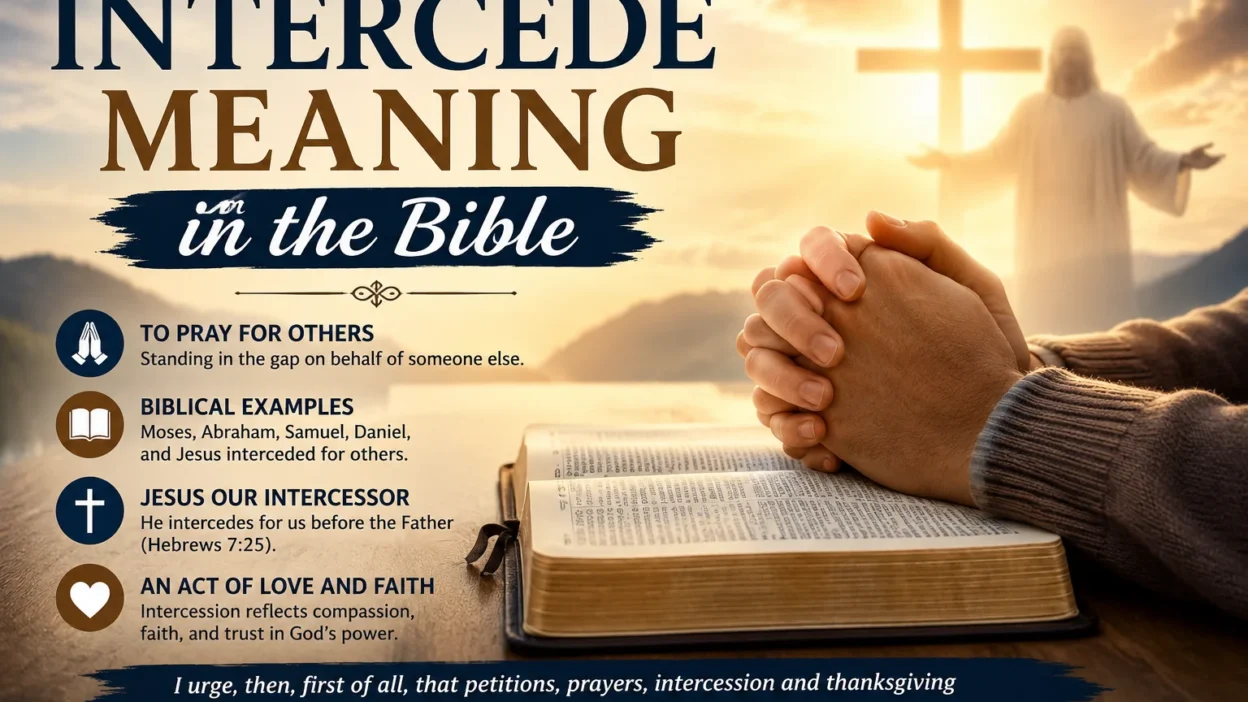
The intercede meaning in the Bible refers to standing in the gap for someone else through prayer, pleading, or asking God for mercy and guidance on another person’s behalf.
Throughout Scripture, intercession is a powerful act of love, faith, and compassion that reflects God’s desire for His people to care for one another. Understanding the intercede meaning in the Bible helps believers recognize the importance of praying for others and trusting God to work in every situation.
From Moses praying for Israel to Jesus interceding for humanity, the Bible presents intercession as an essential part of a faithful life.
Learning the intercede meaning in the Bible offers deeper insight into God’s character, the ministry of Christ, and the calling of every Christian to become a prayerful advocate for others.
Quick Answer
Intercede meaning in the Bible means to pray, plead, or speak to God on behalf of another person. Biblical intercession demonstrates love, mercy, and faith as believers seek God’s help, forgiveness, healing, or protection for others.
What Does Intercede Mean in the Bible?
In the Bible, the word intercede means to step between two parties, especially by praying or pleading with God for someone else. Rather than focusing on personal needs, an intercessor brings another person’s concerns before God.
Biblical intercession includes:
- Praying for forgiveness
- Asking for healing
- Seeking God’s mercy
- Requesting wisdom
- Standing in prayer during difficult times
Intercession reflects God’s heart because it shows selfless concern for others.
SEO Table: Meaning of Intercede in the Bible
| Aspect | Meaning |
|---|---|
| Biblical Meaning | To pray or plead for another person |
| Hebrew Idea | To meet, entreat, or plead |
| Greek Idea | To petition on behalf of someone |
| Spiritual Purpose | Seeking God’s mercy and intervention |
| Main Focus | Helping others through prayer |
Origin and History of the Word Intercede
The English word intercede comes from the Latin word intercedere, meaning “to go between.”
Biblically, the concept existed long before the English language. In the Old Testa group , prophets, priests, and leaders frequently prayed for the people. In the New Testament, Jesus became the perfect and eternal intercessor.
The history of intercession shows that God has always welcomed faithful prayers offered for others.
SEO Table: Origin of Intercession
| Ele group | Description |
|---|---|
| English Origin | Latin intercedere |
| Literal Meaning | To go between |
| Old Testa group t Role | Prophets and leaders prayed for Israel |
| New Testagroup t Fulfillment | Jesus intercedes for believers |
| Christian Practice | Prayer for others |
Intercession Throughout the Bible
Intercession appears from Genesis to Revelation.
Some well-known examples include:
- Abraham prayed for Sodom.
- Moses pleaded for Israel after they sinned.
- Samuel continually prayed for God’s people.
- Elijah prayed for rain.
- Daniel prayed for Israel during exile.
- Jesus prayed for His disciples.
- The early church prayed for one another.
These examples reveal that God values people who faithfully pray for others.
Famous Biblical Examples of Intercession
Moses
After Israel worshiped the golden calf, Moses pleaded with God to spare the nation. His prayer demonstrated compassion and leadership.
Abraham
Abraham interceded for Sodom, asking God to spare the city if righteous people could be found there.
Samuel
Samuel declared that failing to pray for Israel would be a sin, showing how important intercession is.
Daniel
Daniel confessed the sins of his nation while asking God for mercy and restoration.
Jesus Christ
Jesus is the greatest example of an intercessor. He prayed for His followers during His earthly ministry and continues to intercede for believers before the Father.
Spiritual Meaning of Intercede in the Bible
The intercede meaning in the Bible carries rich spiritual symbolism.
Spiritually, intercession represents:
- Love without selfishness
- Compassion for others
- Trust in God’s power
- Standing in the gap during hardship
- Partnership with God’s will
Intercessory prayer reminds believers they are not called to live only for themselves but also to care deeply for others through prayer.
Many Christians view intercession as a ministry that strengthens families, churches, communities, and nations.
Comparison Table: Prayer vs. Intercession
| Prayer | Intercession |
|---|---|
| Often focuses on personal needs | Focuses on others |
| Includes praise and worship | Includes pleading for others |
| Can be individual | Always benefits someone else |
| Builds personal relationship with God | Demonstrates love toward others |
| Common for every believer | Also encouraged for every believer |
Why Is Intercession Important in Christianity?
Intercession matters because it reflects God’s love.
When believers intercede:
- They obey God’s command to pray.
- They support others spiritually.
- They demonstrate compassion.
- They strengthen the church.
- They trust God to work beyond human ability.
Intercessory prayer creates unity among believers and encourages faith during difficult seasons.
Jesus as the Perfect Intercessor
One of the greatest truths in Christianity is that Jesus continues to intercede for believers.
After His resurrection and ascension, Christ became the eternal High Priest.
According to the New Testagroup;
- Jesus understands human weakness.
- He represents believers before God.
- He continually prays for His followers.
- His sacrifice makes intercession possible.
This gives Christians confidence when approaching God in prayer.
How Can Christians Practice Intercession Today?
Every believer can become an intercessor.
Simple ways include:
- Praying for family members.
- Praying for church leaders.
- Praying for friends.
- Praying for governgroup.
- Praying for missionaries.
- Praying for those who are sick.
- Praying for people who do not yet know God.
Intercession does not require special education or status—only a willing heart and faith in God.
Cultural and Modern Usage of Intercede
Outside the Bible, intercede simply means stepping in to help resolve a conflict or asking someone with authority to help another person.
In Christian culture, however, intercession has a much deeper meaning. Churches often organize intercessory prayer groups that pray for healing, peace, revival, and personal needs.
Today, believers around the world continue the biblical tradition of praying faithfully for others.
Why Do People Search “Intercede Meaning in the Bible”?
People often search this phrase because they want to:
- Understand biblical prayer.
- Learn about Jesus’ role as intercessor.
- Improve their prayer life.
- Study Scripture more deeply.
- Discover the spiritual meaning of intercession.
- Prepare Bible studies or sermons.
Many new believers also encounter the word while reading Scripture and want a simple explanation.
Common Misconceptions About Intercession
Several misunderstandings surround biblical intercession.
Misconception 1: Only pastors can intercede.
Truth: Every believer is encouraged to pray for others.
Misconception 2: Intercession guarantees immediate answers.
Truth: God answers according to His perfect timing and wisdom.
Misconception 3: Intercession is only for major problems.
Truth: Believers can pray for others in every circumstance.
Misconception 4: Intercession replaces personal prayer.
Truth: Christians should pray both for themselves and for others.
Lessons We Learn from Biblical Intercession
Studying the intercede meaning in the Bible teaches valuable life lessons.
These include:
- God listens to sincere prayers.
- Love motivates prayer.
- Faith trusts God’s plan.
- Compassion reflects Christ.
- Prayer can strengthen communities.
- Believers should never stop praying for one another.
These timeless principles remain relevant for Christians today.
Final Summary
The intercede meaning in the Bible is far more than simply praying. It is the loving act of standing before God on behalf of another person, asking Him to show mercy, guidance, healing, wisdom, and protection.
Throughout Scripture, faithful group and women demonstrated the power of intercession, while Jesus Christ remains the perfect and eternal intercessor for all believers.
Understanding biblical intercession encourages Christians to develop compassionate hearts, stronger faith, and deeper prayer lives. As believers continue praying for family, friends, churches, and nations, they participate in one of the Bible’s most meaningful spiritual practices.
Final Thought
The intercede meaning in the Bible reveals God’s desire for His people to care deeply for one another through prayer.
Intercession is not reserved for spiritual leaders; it is an invitation for every believer to stand in the gap with love, faith, and hope. Whether praying for healing, forgiveness, wisdom, or strength, intercessory prayer reflects the compassion of Christ and the unity of God’s family.
As you grow in understanding this biblical practice, let intercession become a regular part of your relationship with God. Through faithful prayer, you can encourage others, strengthen your own faith, and participate in God’s ongoing work in the lives of people around you.
FAQs
1. What does intercede mean in the Bible?
It means praying or pleading with God on behalf of another person.
2. Who is the greatest intercessor in the Bible?
Jesus Christ is the perfect and eternal intercessor for believers.
3. Can every Christian intercede?
Yes. Every believer is encouraged to pray for others.
4. Is intercession different from regular prayer?
Yes. Intercession specifically focuses on praying for someone else rather than yourself.
5. Why is intercession important?
It demonstrates love, compassion, faith, and obedience to God.
6. What are examples of biblical intercessors?
Abraham, Moses, Samuel, Daniel, and Jesus all practiced intercession.
7. How can I begin interceding for others?
Start by praying daily for your family, friends, church, community, and those in need.