
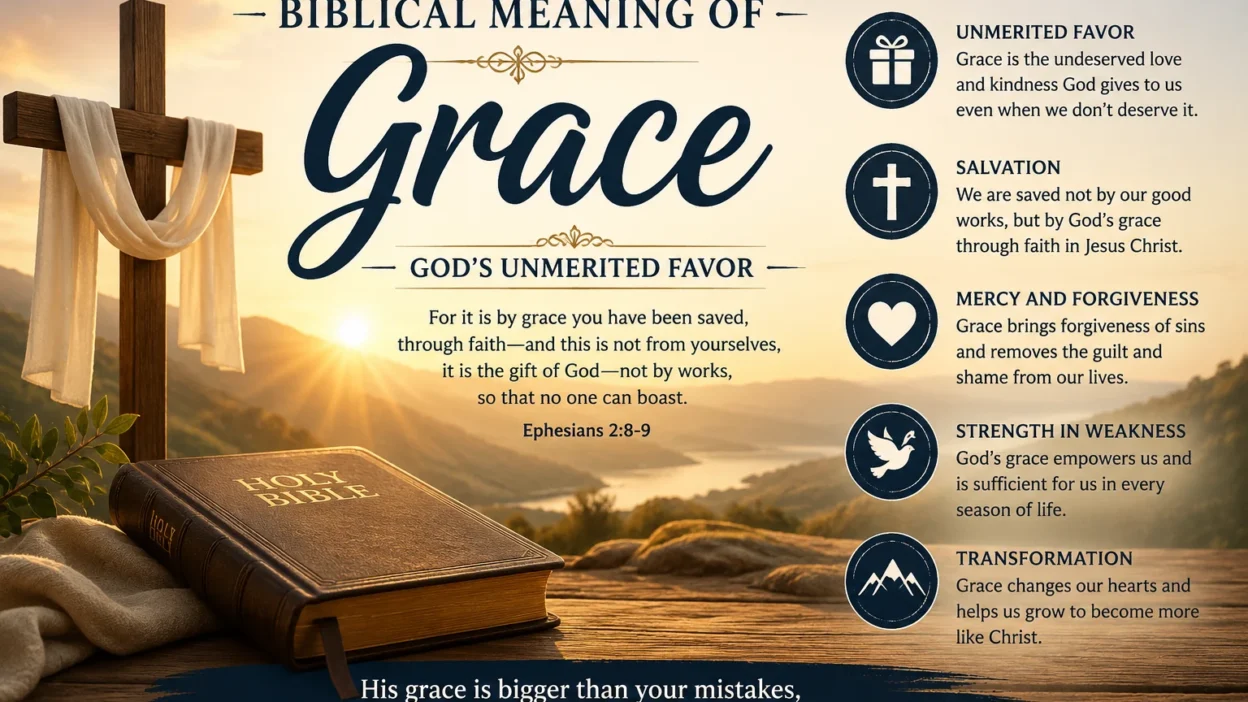
Understanding grace meaning in the Bible is essential for anyone seeking to understand God’s love, mercy, and plan of salvation. In Scripture, grace is one of the most important themes because it describes God’s unearned favor toward humanity.
It is not something people can purchase, earn through good works, or achieve through human effort. Instead, grace is a gift freely given by God.
The grace meaning in the Bible reveals a God who forgives, restores, strengthens, and saves. From the Old Testament to the New Testament, grace appears through God’s kindness, covenant faithfulness, and mercy.
For Christians, grace is especially connected to salvation through Jesus Christ. Learning what grace means biblically can transform how we understand God, forgiveness, faith, and our relationship with Him.
Quick Answer
The grace meaning in the Bible is God’s unmerited favor, kindness, and saving power given freely to people who cannot earn it. Biblical grace brings forgiveness, salvation, strength, and spiritual transformation through faith in God and Jesus Christ.
What Does Grace Mean in the Bible?
In the Bible, grace means God’s undeserved favor and loving kindness toward humanity. It describes something given freely, not because the receiver has earned it, but because of the goodness of the giver.
Grace is closely connected with:
- God’s mercy
- Forgiveness
- Salvation
- Favor
- Love
- Strength
- Spiritual transformation
A person cannot earn God’s grace by being perfect. Instead, grace shows that God reaches toward people even when they are weak, sinful, or undeserving.
Meaning Table
| Aspect | Biblical Meaning |
|---|---|
| Word | Grace |
| Main Idea | Unmerited favor |
| Source | God |
| Human Response | Faith and gratitude |
| Spiritual Result | Forgiveness, salvation, strength |
Origin and History of the Word Grace
The biblical concept of grace comes from important Hebrew and Greek words.
In the Old Testament, the Hebrew word chen can refer to favor, kindness, or graciousness. Another important biblical concept is hesed, often associated with God’s steadfast love and covenant faithfulness.
In the New Testament, the Greek word charis is commonly translated as grace. It can refer to favor, kindness, blessing, or a gracious gift.
Origin Table
| Language | Word | General Meaning |
|---|---|---|
| Hebrew | Chen | Favor or graciousness |
| Hebrew | Hesed | Steadfast love and mercy |
| Greek | Charis | Grace, favor, gracious gift |
| English | Grace | Unmerited favor and kindness |
These words help explain why grace is such a powerful biblical idea. It involves both God’s generous character and His loving action toward people.
Biblical Connection of Grace
Grace appears throughout the Bible.
In the Old Testament, God repeatedly showed grace to individuals and nations. Noah “found grace” in the eyes of the Lord before the flood. God also showed grace through His covenant relationship with Israel, even when the people repeatedly failed.
The New Testament reveals grace most fully through Jesus Christ. John 1:14 describes Jesus as being full of grace and truth. Ephesians 2:8-9 teaches that salvation is by grace through faith, not something earned by human works.
This makes grace central to the Christian message.
Grace and Salvation
One of the most important aspects of grace meaning in the Bible is its connection to salvation.
According to Christian teaching, human beings cannot save themselves through good deeds alone. Sin separates people from God, but God’s grace provides a way of reconciliation.
Through Jesus Christ, believers receive forgiveness and salvation as a gift.
This does not mean good works are unimportant. Instead, good works are a response to God’s grace rather than the price paid to receive it.
Spiritual Meaning of Grace
The spiritual meaning of grace is deep and personal.
Grace Means God Loves the Undeserving
Grace reminds believers that God’s love is not based on human perfection.
People may fail, make mistakes, or fall into sin, but God’s grace offers a path toward forgiveness and restoration.
Grace Provides Strength
Grace is not only about forgiveness. It also gives strength during difficult circumstances.
Paul wrote about God’s grace being sufficient during his weakness. This teaches that divine grace can sustain believers when they feel unable to continue.
Grace Produces Transformation
Grace does not encourage people to remain unchanged. Instead, experiencing God’s grace can inspire a person to live with greater love, humility, obedience, and compassion.
Spiritual Symbolism Table
| Symbol | Spiritual Meaning |
|---|---|
| Open hands | Receiving God’s gift |
| Light | Hope and salvation |
| Water | Cleansing and renewal |
| Cross | Grace through Christ |
| New life | Transformation |
Grace and Mercy: What Is the Difference?
Grace and mercy are closely related, but they are not exactly the same.
Mercy means not receiving the punishment or judgment one deserves.
Grace means receiving an undeserved blessing or favor.
For example, if someone deserves punishment but is forgiven, that illustrates mercy. If that same person is then given love, restoration, and a new opportunity, that illustrates grace.
| Concept | Meaning |
|---|---|
| Mercy | Not receiving deserved punishment |
| Grace | Receiving undeserved favor |
| Justice | Receiving what is deserved |
| Salvation | God’s gracious rescue from sin |
Grace and Faith
The Bible connects grace and faith closely.
Grace is God’s gift, while faith is the response of trusting God.
A person does not earn grace by having perfect faith. Instead, faith receives what God freely offers.
This relationship is one of the central teachings of Christianity. God’s grace provides salvation, and faith trusts in God’s promise.
Common Misconceptions About Grace
Several misunderstandings about grace are common.
Grace Means Sin Does Not Matter
False.
Grace offers forgiveness, but the Bible does not teach that sin is unimportant. Instead, grace leads people away from sin and toward a transformed life.
Grace Is Earned Through Good Works
False.
Good works are important expressions of faith, but biblical grace itself is not earned.
Grace Is Only for Perfect People
False.
Grace is especially meaningful because people are imperfect. God’s grace meets people in their weakness and offers forgiveness and restoration.
Grace Means There Are No Consequences
Not necessarily.
Forgiveness does not always remove earthly consequences. However, God’s grace offers reconciliation with Him and spiritual restoration.
Grace in Christian Life and Modern Usage
The word grace is widely used in Christian language today.
People may speak of:
- Saying grace before a meal
- Living by grace
- Showing grace to others
- Receiving God’s grace
- Grace under pressure
In everyday Christian life, showing grace often means responding to others with patience, forgiveness, kindness, and compassion.
This reflects the biblical understanding that those who receive God’s grace should also learn to extend grace to others.
Why Do People Search for Grace Meaning in the Bible?
People search for grace meaning in the Bible for many reasons.
Some want to understand salvation. Others are struggling with guilt, failure, or feelings of unworthiness.
People may also search for the meaning of grace because they:
- Are studying the Bible
- Want to understand Christianity
- Need encouragement
- Are exploring biblical names or themes
- Want to understand forgiveness
- Are preparing a sermon or devotional
- Are searching for hope after failure
Grace is a powerful biblical truth because it speaks directly to human weakness and God’s love.
Grace Compared with Related Biblical Concepts
| Concept | Main Meaning | Relationship to Grace |
|---|---|---|
| Mercy | Withholding deserved judgment | Closely connected |
| Love | God’s self-giving character | The foundation of grace |
| Faith | Trusting God | Receives grace |
| Forgiveness | Release from guilt | A result of grace |
| Salvation | Rescue from sin | Made possible through grace |
This comparison shows that grace is connected to many central biblical teachings.
How Should Christians Respond to God’s Grace?
A biblical response to grace includes:
- Faith
- Gratitude
- Humility
- Repentance
- Obedience
- Forgiveness toward others
- Love and service
Grace should never produce pride. Since grace is a gift, it should lead people to humility and thankfulness.
Christians are also encouraged to show grace to others. This can mean forgiving someone, being patient with a difficult person, or offering kindness instead of judgment.
Final Summary
The grace meaning in the Bible is God’s unmerited favor, loving kindness, and saving power freely given to humanity. Grace cannot be earned through human achievement. It is received through faith and is revealed most fully through Jesus Christ.
Biblical grace brings forgiveness, salvation, strength, hope, and transformation. It does not excuse sin but gives people the opportunity to turn toward God and live a changed life.
When believers understand grace, they can experience greater freedom from guilt and learn to extend kindness and forgiveness to others.
Final Thought
Grace is one of the most beautiful truths in the Bible because it reminds us that God’s love is greater than our failures. We do not have to become perfect before approaching God.
His grace meets us in our weakness and offers forgiveness, strength, and new life. Through Jesus Christ, grace becomes more than a theological ideait becomes a personal experience of God’s mercy and love.
Understanding grace can change how we see ourselves, God, and other people. It teaches humility because grace is undeserved, and it inspires gratitude because God’s goodness is freely given.
When we truly understand grace, we learn not only to receive God’s kindness but also to show grace to others.
FAQs
What is the biblical meaning of grace?
Grace means God’s unmerited favor, kindness, and blessing given freely to people who cannot earn it.
What is the difference between grace and mercy?
Mercy is not receiving the punishment we deserve, while grace is receiving blessings and favor we do not deserve.
Is grace connected to salvation?
Yes. The New Testament teaches that salvation is received by grace through faith.
Can people earn God’s grace?
No. Biblical grace is a free gift from God, not something earned through good works.
Does grace mean Christians can continue sinning?
No. Grace offers forgiveness and transformation, encouraging believers to turn away from sin.
How can Christians show grace to others?
Christians can show grace through forgiveness, patience, kindness, compassion, and refusing to respond to others with unnecessary judgment.
Why is grace important in Christianity?
Grace is important because it explains God’s forgiveness, salvation, mercy, and loving relationship with humanity.