Understanding the repentance meaning in the Bible is essential for anyone seeking to understand the Christian message of forgiveness, salvation, and spiritual transformation.
In Scripture, repentance is much more than simply feeling sorry for something wrong. It involves a sincere change of heart, turning away from sin, and turning toward God.
The Bible presents repentance as an important response to God’s truth and a pathway toward restoration.
The repentance meaning in the Bible is closely connected to forgiveness, humility, faith, and a transformed life. From the Old Testament prophets to the teachings of Jesus and the apostles, Scripture repeatedly calls people to return to God.
Biblical repentance is not merely an emotional moment; it is a spiritual decision that leads to changed priorities, renewed thinking, and a deeper relationship with God.
Quick Answer
The repentance meaning in the Bible is a sincere turning away from sin and turning toward God. It involves a change of mind, heart, and direction. True biblical repentance includes recognizing sin, feeling genuine sorrow, confessing wrongdoing, seeking God’s forgiveness, and choosing to live according to God’s will.
What Does Repentance Mean in the Bible?
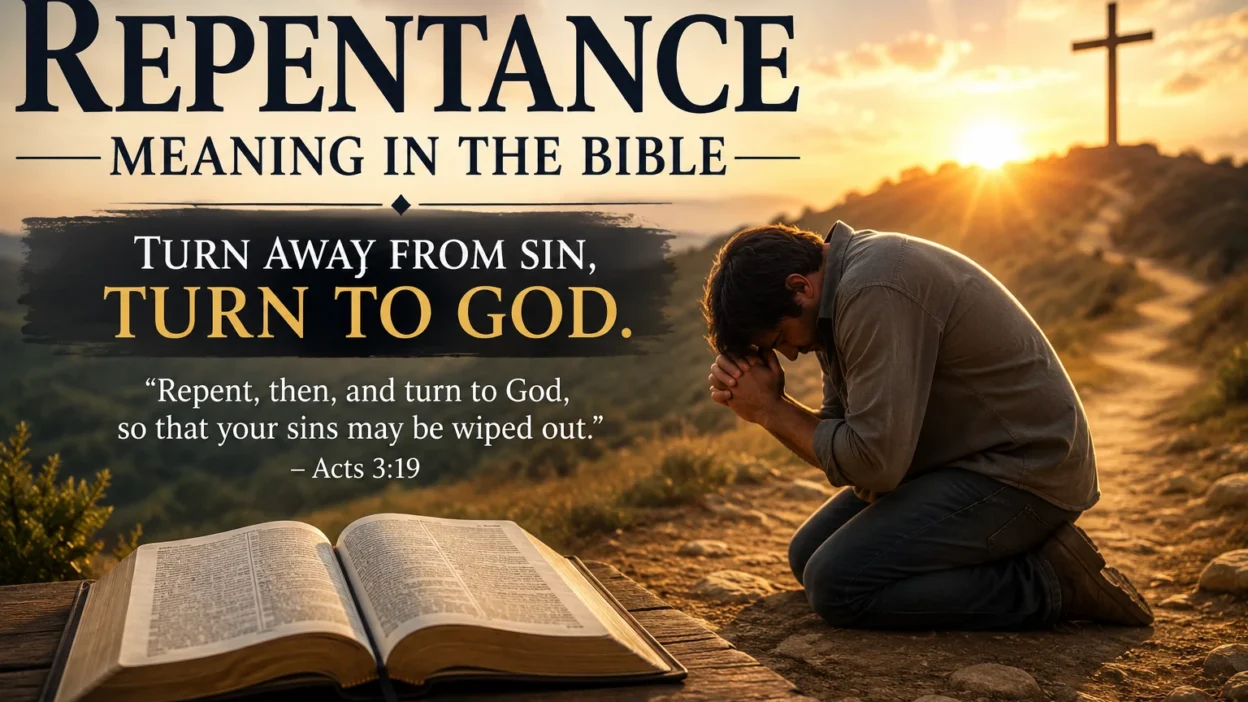
Repentance means turning away from a sinful way of life and returning to God.
The biblical idea of repentance includes more than regret. A person may feel bad about something without truly changing. Biblical repentance involves a change in direction.
For example, someone may recognize that a certain attitude or action is wrong. Repentance means not only admitting the wrong but also turning away from it and seeking to follow God’s ways.
| Aspect | Biblical Meaning |
|---|---|
| Repentance | Turning away from sin |
| Heart | Genuine inner change |
| Mind | A change in thinking |
| Action | A changed direction |
| Goal | Returning to God |
Origin and History of the Word Repentance
The English word “repentance” comes from older words connected with regret, sorrow, and a change of mind.
In the Old Testament, the Hebrew concept of repentance is often connected with the idea of turning or returning. The prophets repeatedly called Israel to return to God and abandon idolatry and injustice.
In the New Testament, the Greek word commonly associated with repentance is metanoia. It refers to a change of mind, understanding, or direction.
This biblical concept shows that repentance involves the whole person. It begins internally but should eventually influence a person’s behavior and choices.
Origin Table
| Biblical Context | Key Idea |
|---|---|
| Old Testament | Returning to God |
| Hebrew Concept | Turning back or changing direction |
| New Testament | Change of mind and heart |
| Christian Teaching | Turning from sin toward God |
Repentance in the Old Testament
Repentance is a major theme throughout the Old Testament.
The prophets repeatedly warned people about the consequences of sin while also offering the hope of restoration. Their message was often a call to return to God with sincere hearts.
For example, the prophet Joel called people to return to God with all their hearts. This demonstrates that repentance is not merely an outward religious activity. God desires genuine inward change.
The Old Testament also shows that repentance can bring restoration. When people humbled themselves and turned from evil, they were encouraged to seek God’s mercy.
Repentance in the New Testament
Repentance becomes especially prominent in the New Testament.
John the Baptist began his ministry by calling people to repent. Jesus also preached repentance as part of the message of God’s kingdom.
The apostles continued this message after Jesus’ resurrection. Repentance was presented as an essential response to the gospel.
The New Testament teaches that repentance and faith are closely connected. A person turns away from sin while turning toward Christ in trust.
The Spiritual Meaning of Repentance
The spiritual meaning of repentance is transformation.
Repentance begins when a person recognizes that something in their life is contrary to God’s will. This recognition may produce sorrow, but biblical repentance does not end with sadness.
True repentance leads to a changed relationship with sin and a renewed desire to follow God.
Symbolic Meaning of Repentance
Repentance can spiritually symbolize:
- Turning from darkness to light
- Returning home after wandering
- Leaving an old life behind
- Receiving forgiveness
- Beginning again
- Rebuilding a relationship with God
- Choosing obedience over rebellion
This is why repentance is such a powerful biblical theme. It represents a new direction and the possibility of restoration.
Repentance and Forgiveness
Repentance and forgiveness are closely related but are not exactly the same.
Repentance is the turning of the heart toward God. Forgiveness is God’s gracious response to confessed and forsaken sin.
The Bible repeatedly teaches that God is merciful and willing to forgive those who sincerely seek Him.
However, repentance should not be understood as a way to earn God’s love. Instead, repentance is a response to God’s truth, grace, and mercy.
Repentance and Salvation
Christian teaching connects repentance with salvation.
Jesus called people to repent and believe the gospel. This shows that repentance is not simply about becoming a better person through human effort.
Instead, it involves recognizing one’s need for God and turning toward His saving grace.
A person who genuinely repents does not claim to be perfect. Rather, they acknowledge their sin and choose to depend on God for forgiveness and transformation.
What Does True Repentance Look Like?
True repentance can be seen through several important characteristics.
1. Recognition of Sin
A person must first acknowledge that something is wrong.
2. Genuine Sorrow
Biblical repentance involves sincere sorrow over sin, not merely regret about being caught.
3. Confession
The individual honestly acknowledges the wrongdoing before God.
4. Turning Away
Repentance involves leaving the sinful behavior or attitude behind.
5. Turning Toward God
The goal is not simply to stop doing something wrong but to pursue a closer relationship with God.
6. Changed Behavior
A changed heart eventually produces changed actions.
Repentance vs. Regret
One of the most common misunderstandings is confusing repentance with regret.
| Regret | Repentance |
|---|---|
| Feels bad about consequences | Feels sorrow over sin |
| May remain unchanged | Leads to a new direction |
| Focuses on the past | Looks toward transformation |
| Can be temporary | Produces lasting change |
| May avoid responsibility | Accepts responsibility |
A person may regret being punished without truly wanting to change. Biblical repentance goes deeper because it involves a changed relationship with sin.
Repentance vs. Remorse
Remorse is deep emotional pain over wrongdoing.
Repentance may include remorse, but it goes further.
Someone can feel terrible about a mistake yet continue making the same choices. Repentance involves turning away from the wrong path and seeking a new way of living.
The emotional experience may be powerful, but the biblical focus is ultimately on transformation.
Why Do People Search for Repentance Meaning in the Bible?
People search for the repentance meaning in the Bible for many different reasons.
Some are studying Scripture and want to understand what repentance truly means. Others may be experiencing guilt, spiritual confusion, or a desire to reconnect with God.
People may also search for this topic because they want to understand:
- How to repent
- Whether God forgives sin
- The difference between guilt and repentance
- What true repentance looks like
- Whether repentance is necessary for salvation
- How to return to God after sin
The biblical message is that no sincere return to God is meaningless. Scripture consistently presents God as merciful toward those who genuinely seek Him.
Common Misconceptions About Repentance
Several misunderstandings surround repentance.
Misconception 1: Repentance Means Being Perfect
Repentance does not mean a person will never make another mistake.
It means the person has turned toward God and no longer wants to continue living in rebellion.
Misconception 2: Repentance Is Only Feeling Guilty
Guilt may lead someone toward repentance, but guilt alone is not repentance.
Repentance includes a change of direction.
Misconception 3: Repentance Is Only for Non-Christians
The Bible also encourages believers to confess sin, correct their ways, and return to God when they fall.
Misconception 4: God Will Not Forgive Repeated Sin
The Bible emphasizes God’s mercy. While repentance should be sincere, believers should not assume that past failures make God’s forgiveness impossible.
A Simple Biblical Pattern of Repentance
The biblical pattern of repentance can be summarized like this:
| Step | Description |
|---|---|
| Recognize | Admit the wrong |
| Feel | Experience genuine sorrow |
| Confess | Be honest before God |
| Turn | Leave the sinful direction |
| Trust | Depend on God’s mercy |
| Change | Live according to God’s will |
This pattern provides a simple way to understand the practical meaning of repentance.
How Repentance Changes a Person Spiritually
Repentance can bring significant spiritual change.
It can produce humility because a person admits their need for God. It can bring freedom because guilt and hidden sin are brought into the light. It can also renew a person’s relationship with God.
Repentance may not immediately remove every consequence of past actions, but it can change the direction of a person’s life.
The person who once ran away from God begins to seek Him. The person who once justified sin begins to desire truth. The person who lived only for self begins to pursue God’s purposes.
Final Summary: Repentance Meaning in the Bible
The repentance meaning in the Bible is a sincere change of heart and direction that turns a person away from sin and toward God. It involves recognizing wrongdoing, experiencing genuine sorrow, confessing sin, seeking forgiveness, and choosing a new path.
Repentance is not simply regret, shame, or an emotional reaction. It is a spiritual turning point. Throughout Scripture, God calls people to return to Him, and the biblical message consistently emphasizes His mercy toward those who sincerely seek Him.
Final Thought
Repentance is one of the Bible’s most hopeful teachings because it reminds us that failure does not have to be the end of the story. God calls people to turn away from sin and return to Him with humility and faith.
True repentance involves more than words or temporary emotion; it produces a new direction and a desire to live according to God’s truth. Even when someone has wandered far from God, the invitation to return remains powerful.
The message of repentance is ultimately a message of grace, restoration, and hope. It teaches that a changed heart can lead to a changed life through God’s mercy and transforming power.
FAQs
What is the meaning of repentance in the Bible?
Repentance means turning away from sin and turning toward God with a sincere change of heart and direction.
Is repentance the same as feeling sorry?
No. Feeling sorry may be part of repentance, but true repentance also involves a change in direction and behavior.
Why is repentance important in Christianity?
Repentance is important because it involves recognizing sin, seeking God’s forgiveness, and turning toward a life of faith and obedience.
Can God forgive someone who sincerely repents?
Yes. The Bible repeatedly presents God as merciful and willing to forgive those who sincerely turn to Him.
What is the difference between repentance and regret?
Regret focuses on feeling bad about something, while repentance includes a genuine decision to turn away from wrongdoing.
Does repentance mean a person will never sin again?
No. Repentance does not mean perfection. It means a person has turned toward God and continues seeking transformation.
How can someone repent according to the Bible?
A person can repent by acknowledging sin, confessing it to God, turning away from wrongdoing, seeking forgiveness, and choosing to follow God’s ways.