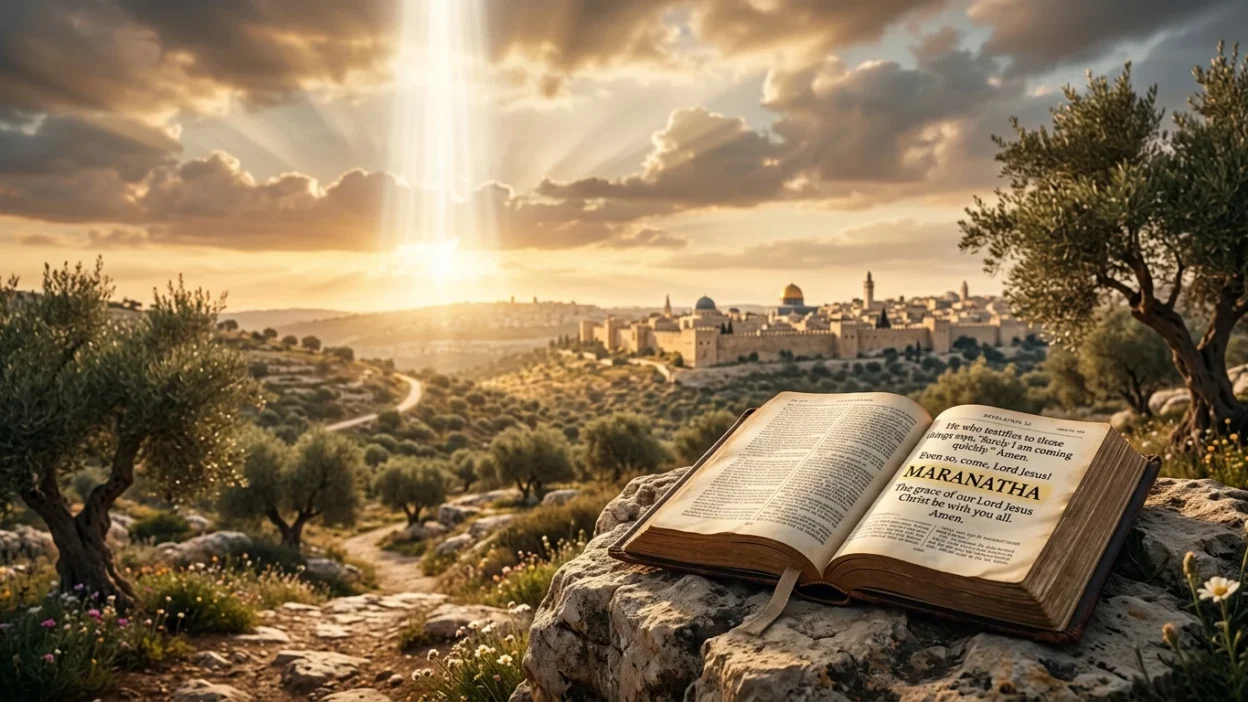
The phrase maranatha meaning in the Bible has inspired Christians for centuries because it expresses both hope and anticipation for Jesus Christ’s return.
Found in the New Testament, “Maranatha” is one of the few Aramaic words preserved in the Bible, making it especially meaningful for Bible students and believers alike.
Understanding maranatha meaning in the Bible helps reveal the faith and expectation of the early Christian church.
Many people search for maranatha meaning in the Bible to learn whether it is a prayer, a greeting, or a prophecy. In reality, it carries elements of all three
. It reminds believers to remain faithful, live with expectation, and eagerly await the return of the Lord Jesus Christ.
Quick Answer
Maranatha is an Aramaic expression found in 1 Corinthians 16:22 that means “Our Lord, come!” or “Our Lord has come,” depending on punctuation. Most Bible scholars understand it as “Come, our Lord!” It expresses hope, faith, and expectation of Christ’s second coming.
What Does Maranatha Mean in the Bible?
The maranatha meaning in the Bible comes from the Aramaic words:
- Maran = Our Lord
- Atha = Has come or Come
Most modern Bible scholars translate the phrase as:
- Our Lord, come!
- Come, O Lord!
This was likely a prayer spoken by early Christians who longed for Jesus’ return.
Meaning Table
| Aspect | Details |
|---|---|
| Word | Maranatha |
| Language | Aramaic |
| Biblical Reference | 1 Corinthians 16:22 |
| Common Meaning | Our Lord, come! |
| Theme | Hope, expectation, Christ’s return |
Origin and History of Maranatha
Maranatha originated in the Aramaic language, which was commonly spoken during Jesus’ earthly ministry.
Although the New Testament was primarily written in Greek, several Aramaic expressions remain because they held deep spiritual significance. Like “Abba” and “Eloi,” Maranatha preserves the heartfelt faith of the earliest believers.
The early church often used this expression during worship and prayer as they anticipated Christ’s return.
Where Is Maranatha Found in the Bible?
The word appears only once directly in Scripture.
1 Corinthians 16:22
“If anyone does not love the Lord, let that person be under God’s curse. Come, Lord!” (Maranatha)
Although the word appears once, the theme of longing for Christ’s return appears throughout the New Testament.
Biblical Connection of Maranatha
The maranatha meaning in the Bible is closely connected with:
- The Second Coming of Christ
- Christian hope
- Faithful living
- God’s final kingdom
- Eternal salvation
It reminds believers that history is moving toward God’s perfect plan.
Spiritual Meaning of Maranatha
The spiritual meaning of Maranatha is powerful.
Hope
Believers look forward to Christ’s return with confidence.
Faithfulness
The word encourages Christians to remain faithful until Jesus comes again.
Readiness
Maranatha reminds believers to live holy lives and stay spiritually prepared.
Victory
It points toward Christ’s ultimate victory over sin, death, and evil.
Comfort
For suffering Christians, the phrase offers assurance that God will make all things new.
Why Was Maranatha Important to Early Christians?
The first Christians faced persecution, hardship, and uncertainty.
Instead of losing hope, they greeted one another with words that reminded them Jesus would return.
Maranatha became:
- A prayer
- A confession of faith
- A message of encouragement
- A reminder of eternal hope
It strengthened believers during difficult times.
Maranatha Compared with Similar Biblical Expressions
| Phrase | Meaning | Purpose |
|---|---|---|
| Maranatha | Come, Lord | Hope for Christ’s return |
| Amen | So be it | Agreement and faith |
| Hallelujah | Praise the Lord | Worship |
| Abba | Father | Intimacy with God |
| Hosanna | Save us | Prayer for salvation |
Each phrase expresses an important aspect of Christian faith.
Modern Usage of Maranatha
Today, Maranatha continues to be used by Christians worldwide.
You may hear it in:
- Church worship
- Christian songs
- Prayer meetings
- Bible studies
- Christian books
- Ministry names
- Christian schools
Its message remains timeless because believers still await Christ’s return.
Why Do People Search for Maranatha Meaning in the Bible?
People search for maranatha meaning in the Bible because they want to understand:
- The original biblical meaning
- End-times prophecy
- The Second Coming
- Christian hope
- Bible study topics
- Spiritual encouragement
- The Aramaic language in Scripture
Its unique origin makes it one of the most interesting biblical expressions.
Common Misconceptions About Maranatha
Many misunderstand the meaning of Maranatha.
| Misconception | Truth |
|---|---|
| It is a Hebrew word | It is Aramaic |
| It is a person’s name | It is a phrase |
| It appears many times | It appears once directly |
| It guarantees a date for Christ’s return | It expresses hope, not a timeline |
| It is only for pastors | It is for every believer |
Understanding these facts helps interpret the word correctly.
Lessons Christians Can Learn from Maranatha
The message of Maranatha teaches believers to:
- Live with eternal hope.
- Stay faithful during trials.
- Keep Christ at the center of life.
- Remember God’s promises.
- Share the gospel while waiting.
- Trust God’s perfect timing.
- Look forward to eternity with joy.
These timeless lessons remain relevant for Christians today.
Final Thought
The word Maranatha captures the heart of Christian hope. In just one short phrase, it expresses faith in Jesus Christ, confidence in His promises, and eager anticipation of His return.
If spoken as a prayer, read during Bible study, or reflected upon in personal devotion, Maranatha encourages believers to focus on eternity rather than temporary struggles. It reminds Christians that Christ has come, Christ is present, and Christ will come again. Living with the spirit of Maranatha means walking each day with hope, readiness, and unwavering trust in God’s perfect plan.
FAQs
What does Maranatha mean in the Bible?
Maranatha means “Come, our Lord!” or “Our Lord has come,” with most scholars favoring “Come, Lord!”
Where is Maranatha found in the Bible?
It appears in 1 Corinthians 16:22.
Is Maranatha Hebrew or Aramaic?
It is an Aramaic word.
Why did early Christians use Maranatha?
They used it as a prayer and expression of hope for Jesus Christ’s return.
Is Maranatha related to the Second Coming?
Yes. It expresses the expectation and hope of Christ’s second coming.
Can Christians still say Maranatha today?
Yes. Many believers use it in worship, prayer, and personal devotion.
What spiritual lesson does Maranatha teach?
It teaches hope, faithfulness, readiness, perseverance, and trust in God’s promises.

Daniel Jack is a passionate writer at BibleIntent, dedicated to exploring biblical meanings, spiritual symbolism, and faith-based insights. He helps readers discover deeper spiritual understanding through scripture, signs, and interpretations.