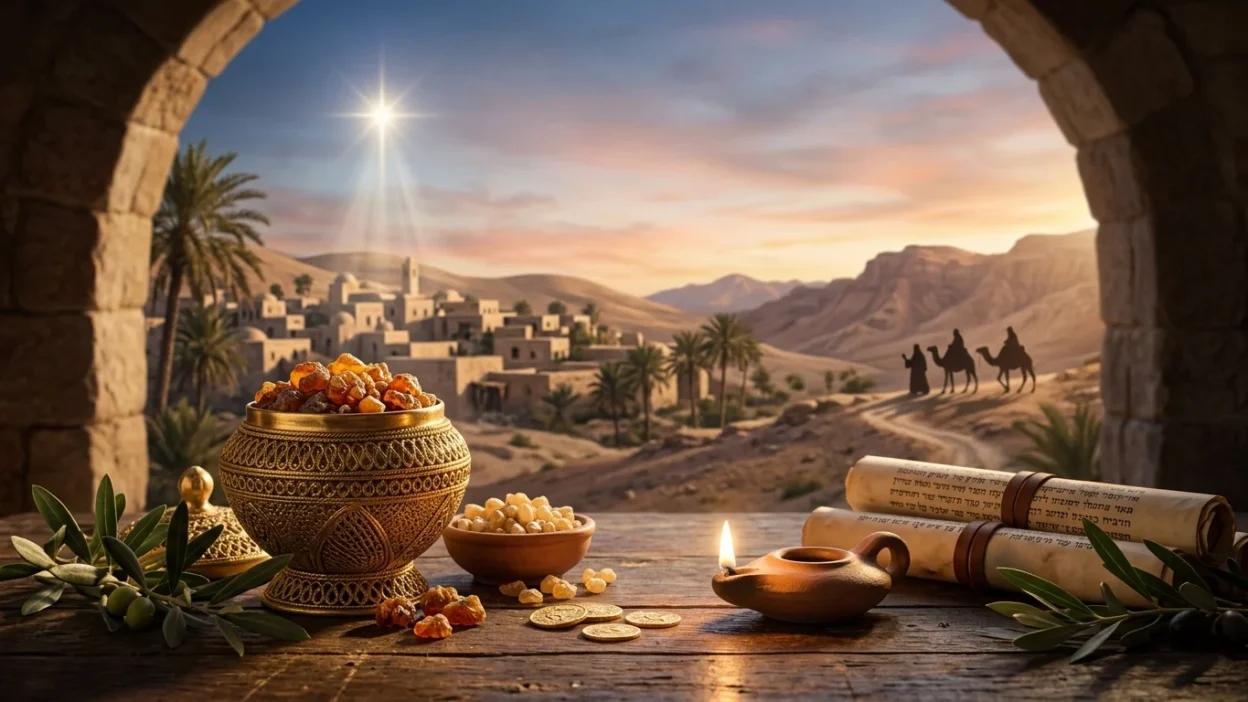
The myrrh meaning in the Bible is deeply connected with worship, sacrifice, healing, and the life of Jesus Christ.
Throughout Scripture, myrrh appears as a valuable aromatic resin used for perfumes, anointing oil, incense, and burial preparations.
Understanding the myrrh meaning in the Bible helps believers appreciate its rich symbolism and why it appears at significant moments in biblical history.
From the gifts presented to baby Jesus by the wise men to its use during His crucifixion and burial, myrrh carries profound spiritual meaning. Studying the myrrh meaning in the Bible reveals themes of suffering, redemption, devotion, and God’s eternal plan for salvation.
This article explores its biblical definition, history, symbolism, and lasting importance for Christians today.
Quick Answer
The myrrh meaning in the Bible symbolizes sacrifice, suffering, purification, healing, worship, and preparation for burial.
It is most famously known as one of the three gifts presented to Jesus by the wise men, pointing to His future sacrifice and His role as the Savior of the world.
What Is the Myrrh Meaning in the Bible?
Myrrh is a fragrant resin obtained from small thorny trees belonging to the Commiphora family, native to Arabia and parts of northeastern Africa.
In biblical times, it was one of the most valuable spices because of its pleasant fragrance and many practical uses.
The myrrh meaning in the Bible extends far beyond its physical value. It became a symbol of suffering, holiness, worship, and God’s redemptive work through Jesus Christ.
Meaning Table
| Aspect | Meaning |
|---|---|
| Biblical Meaning | Sacrifice, purification, worship |
| Hebrew Name | Mor |
| Greek Name | Smyrna |
| Main Symbol | Suffering and redemption |
| Common Uses | Anointing oil, perfume, incense, burial spice |
Origin and History of Myrrh
Myrrh has been traded for thousands of years across the ancient Near East. The resin was harvested by making cuts in the bark of the tree, allowing the sap to harden before collection.
Ancient civilizations, including Egypt, Israel, and Arabia, prized myrrh for its fragrance, medicinal properties, and ceremonial importance.
Because it was expensive, myrrh became associated with royalty, honor, and sacred worship.
The Bible frequently mentions myrrh as part of holy anointing oil and temple worship, emphasizing its spiritual significance.
Myrrh in the Bible
The Bible references myrrh numerous times in both the Old and New Testaments.
Important passages include:
- Exodus 30:22–25 – Used in the sacred anointing oil.
- Psalm 45:8 – Symbolizes royal garments.
- Song of Solomon – Represents love and beauty.
- Matthew 2:11 – One of the gifts brought by the wise men.
- Mark 15:23 – Jesus was offered wine mixed with myrrh before His crucifixion.
- John 19:39 – Nicodemus used myrrh for Jesus’ burial.
Each passage highlights different aspects of God’s plan and the sacred role of myrrh.
Why Did the Wise Men Bring Myrrh to Jesus?
One of the most well-known appearances of myrrh occurs during Jesus’ birth.
The wise men brought three gifts:
- Gold
- Frankincense
- Myrrh
Each gift carried symbolic meaning.
Gold honored Jesus as King.
Frankincense represented His divine priesthood.
Myrrh foreshadowed His suffering, death, and burial.
By presenting myrrh to the infant Jesus, the wise men unknowingly acknowledged the sacrifice He would one day make for humanity’s salvation.
Spiritual Meaning of Myrrh
The myrrh meaning in the Bible carries powerful spiritual symbolism that remains meaningful for Christians today.
Spiritually, myrrh represents:
- Sacrifice
- Obedience
- Purification
- Healing
- Redemption
- Faithfulness during suffering
Like myrrh, believers often experience spiritual growth through trials. Difficult seasons can strengthen faith and produce a life that reflects God’s grace.
Symbolic Interpretation Table
| Symbol | Spiritual Meaning |
|---|---|
| Fragrance | A life pleasing to God |
| Anointing Oil | Consecration and holiness |
| Burial Spice | Christ’s sacrifice |
| Healing Medicine | Spiritual restoration |
| Precious Resin | The priceless gift of salvation |
Myrrh as a Symbol of Jesus Christ
Many Bible scholars believe myrrh points directly to Jesus’ mission on earth.
It symbolizes:
- His suffering on the cross.
- His sacrificial death.
- His burial.
- His victory over sin.
- God’s love for humanity.
The gift of myrrh reminds believers that Jesus came not only to reign as King but also to give His life for the salvation of the world.
Practical Uses of Myrrh in Biblical Times
Besides its spiritual meaning, myrrh had many everyday uses.
It was commonly used for:
- Perfume
- Incense
- Sacred anointing oil
- Medicine
- Embalming
- Burial preparation
Because of its preservative and aromatic qualities, myrrh became highly valuable throughout the ancient world.
Cultural and Modern Usage
Today, myrrh continues to be used in:
- Essential oils
- Natural medicine
- Christian teaching
- Church sermons
- Christmas nativity stories
- Religious artwork
Many Christians also recognize myrrh as an important biblical symbol during Christmas because of its connection to the birth of Jesus.
Why People Search “Myrrh Meaning in the Bible”
People search this topic because they want to understand:
- Why myrrh was given to Jesus.
- The symbolism of the three gifts.
- The spiritual lessons behind myrrh.
- Its use in biblical worship.
- The deeper meaning of Christ’s sacrifice.
Learning about myrrh helps readers better understand God’s redemptive story throughout Scripture.
Common Misconceptions About Myrrh
Many misunderstand the biblical role of myrrh.
| Misconception | Biblical Truth |
|---|---|
| Myrrh was only perfume | It had ceremonial, medicinal, and burial uses |
| It was an ordinary spice | It was one of the most valuable products of its time |
| It symbolizes sadness alone | It represents sacrifice, healing, worship, and redemption |
| Only mentioned at Jesus’ birth | It appears throughout both the Old and New Testaments |
Lessons Christians Can Learn from Myrrh
The myrrh meaning in the Bible teaches several timeless spiritual lessons.
Believers are encouraged to:
- Worship God wholeheartedly.
- Remain faithful during suffering.
- Accept God’s refining work.
- Live lives that honor Christ.
- Remember Jesus’ sacrifice with gratitude.
- Trust God’s greater purpose in difficult seasons.
Myrrh reminds Christians that sacrifice often leads to eternal victory.
Comparison Table: Gold, Frankincense, and Myrrh
| Gift | Symbolism | Represents |
|---|---|---|
| Gold | Kingship | Jesus as King |
| Frankincense | Worship and prayer | Jesus as High Priest |
| Myrrh | Sacrifice and burial | Jesus as Savior |
Final Thought
The story of myrrh is much more than the history of an ancient spice. It is a powerful reminder that God’s greatest blessings often come through sacrifice and faithful obedience.
The myrrh meaning in the Bible encourages believers to trust God even during seasons of hardship, knowing that He uses every challenge for His greater purpose.
Just as myrrh’s fragrance was released through the breaking of the resin, Christians are often refined through trials to reflect Christ’s character.
Ultimately, myrrh points to Jesus the Savior who willingly suffered, died, and rose again so that humanity could receive forgiveness, hope, and eternal life. Its message continues to inspire faith, worship, and gratitude for God’s amazing love.
FAQs
1. What does myrrh mean in the Bible?
Myrrh symbolizes sacrifice, suffering, worship, healing, purification, and redemption.
2. Why did the wise men give Jesus myrrh?
It foreshadowed Jesus’ future suffering, death, and burial as the Savior.
3. Was myrrh valuable in biblical times?
Yes. It was one of the most expensive and treasured spices in the ancient world.
4. What was myrrh used for in the Bible?
It was used in anointing oil, perfume, incense, medicine, and burial preparations.
5. What is the spiritual meaning of myrrh?
Spiritually, myrrh represents faithful endurance, holiness, sacrifice, and God’s redemptive love.
6. Is myrrh mentioned in both the Old and New Testaments?
Yes. It appears throughout both Testaments in worship, royal ceremonies, and the life of Jesus.
7. What lesson does myrrh teach Christians today?
It teaches believers to trust God through suffering, live holy lives, and remember Christ’s sacrificial love.